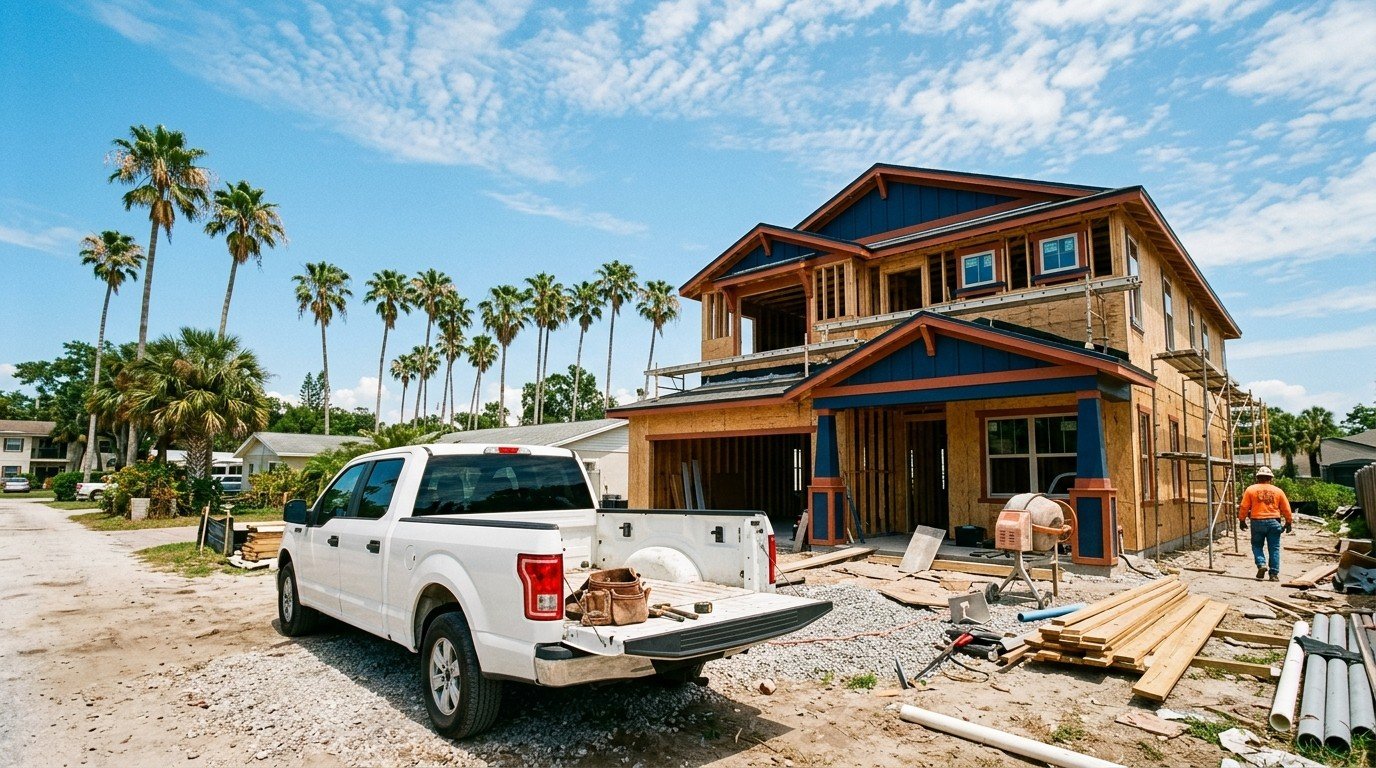
A Palm Beach contractors license is a county certificate of competency, and the county currently certifies 31 categories: eight construction trades and 23 specialty trades. Twenty nine of those let you contract. The other route is a state license, which works in every Florida county and skips the local exam entirely.
Listen to this article, about 19 minutes. A synthetic voice reads the article and announces each section title as it begins; tables are read row by row and the questions at the end are left out.
Recorded 19 October 2026 from the article as published that day. Press a chapter to jump there; the highlighted line is what is playing. A play button sits beside every section heading, and once you scroll past this player a bar at the bottom of the screen keeps the controls in reach. Tap or click any sentence to hear the reading start from there.
On this page: a breakdown of the 31 license categories, a table comparing county and state licenses, renewal schedules, and a step by step application checklist.
Think you already know this? Five questions, one minute.
Every answer is on this page. Answer from what you know now; the page fills in the rest.
-
1. What legal authority allows Palm Beach County to keep its wide trade list while other counties trim theirs?
Palm Beach County operates under Chapter 67-1876, a Special Act of the Laws of Florida, which provides its unusual licensing authority. Read the section
-
2. Which two construction trade categories licensed by the county do not allow you to contract?
Journeyman electrical and journeyman plumber cards are not contracting licenses, and holders must work under a master. Read the section
-
3. What is the main geographical difference between a county certificate and a state license?
Under section 489.105(8) of the Florida Statutes, a certified state contractor can work in any Florida jurisdiction, whereas a county certificate only works locally. Read the section
-
4. How often and in what years do county certified contractors renew their active certificates?
County certified contractors renew in odd years by September 30, and must complete 14 hours of continuing education as detailed in the county continuing education notice. Read the section
-
5. Which statute limits local governments from requiring licenses for trades like painting or flooring?
Section 489.117(4) of the Florida Statutes prohibits local governments from licensing scopes that do not correspond to state categories, listing painting and flooring as examples. Read the section
What is a Palm Beach contractors license, legally speaking?
It is a certificate of competency issued by the Construction Industry Licensing Board of Palm Beach County, and its authority is unusual. Most county licensing in Florida runs on a county ordinance. Palm Beach runs on Chapter 67-1876, a Special Act of the Laws of Florida, as amended, which is part of why the county has kept a wide trade list while other counties have trimmed theirs.
The practical effect is simple. Hold the certificate and you can advertise, bid and contract in that trade inside Palm Beach County. Step outside the county line and it stops working, which is the whole argument for the state route further down this page.
Which of the 31 categories does your work fall into?
Eight of the categories are construction trades. Two of those eight, journeyman electrical and journeyman plumber, are not contracting licences at all: the county is explicit that a journeyman works under a master and may not contract. That leaves 29 categories you can actually run a business on.
| Category | Experience required | Can you contract? |
|---|---|---|
| General | 5 years supervisory, or 1 year as a licensed building contractor, or 2 as residential | Yes, unlimited height and area |
| Building | 4 years supervisory | Yes, up to three storeys or 36 feet |
| Residential | 3 years supervisory | Yes, one to three family homes, two storeys |
| Electrical | 7 years, 4 as a journeyman in a supervisory capacity | Yes |
| Plumbing | 7 years, 4 as a journeyman plumber in a supervisory capacity | Yes |
| HARV (heating, air conditioning, refrigeration, ventilation) | 7 years supervisory | Yes |
| Journeyman electrical | 4 year apprenticeship, or 6 years practical work | No, works under a master electrician |
| Journeyman plumber | 3 year apprenticeship, or 4 years practical work | No, works under a master plumber |
The other 23 are specialty categories, each needing three years of experience with at least eighteen months of it supervisory. They are aluminium specialties, carpentry, concrete forming and placing, demolition, drywall, fence, garage doors, glass and glazing, gunite, hurricane shutter and awning, irrigation sprinkler, low voltage, marine, masonry, plastering, rescreener and screen repair, roofing, sign contractor electrical, structural steel erection, swimming pool construction, swimming pool maintenance and repair, underground utilities, and window and door.
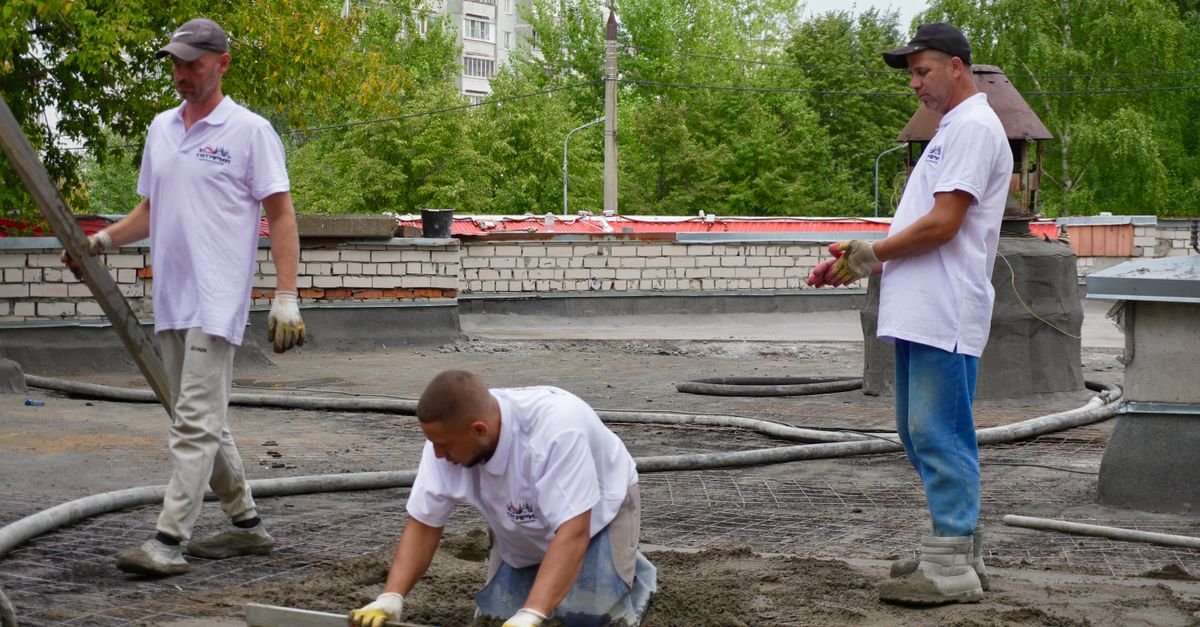
Picking between them is where people lose time, because the boundaries are drawn by voltage and by scope, not by what the job is called. Low voltage and irrigation both stop at 98 volts. A fence contractor can write the electrical work into the contract but has to subcontract it. An aluminium specialties contractor can build a screen enclosure and pour the slab under it, but may not touch a roof truss. If your work straddles two categories, read the scope wording before you pay for an exam, not after. That same category question opens every county process, including the Pasco County registration route.

County certificate or state license: which one do you actually need?
This decision matters more than the exam. Under section 489.105(8) of the Florida Statutes, a certified contractor holds a certificate from the state and may contract in any jurisdiction in Florida without meeting that jurisdiction’s competency requirements. A registered contractor has met the local requirements and may contract only where that registration applies. Whether a registration reaches past county lines, and when it can be grandfathered into a state certificate, is set out in our registered versus certified contractor decision table and grandfathering checklist.
| Palm Beach certificate of competency | State license from the DBPR | |
|---|---|---|
| Where it works | Palm Beach County only | Every county in Florida |
| Who examines you | The county board, tested by Prov or GITS | The state, through its own vendor |
| Application fee | $450 for contractors, $100 for journeymen | Set by state rule, varies by category |
| Approval step | Board meeting, usually the fourth Monday | Department review, board referral if flagged |
| Renewal deadline | 30 September, every two years | 31 August, every two years |
| Specialty trades available | 23 county categories | State categories only |
If you plan to work only in one county, a local license may be cheaper and cover more trades. But if you want to work across Florida, a state license is the better choice, and its numbers are fixed too. The DBPR examination application pack charges $135 to Professional Testing for each registration, then Pearson VUE’s fee per part: $80 for Business and Finance and $40 each for Contract Administration and Project Management, so a first sitting of all three parts comes to $295. The license application fee is then $245 or $145 under rule 61G4-12.009, depending on where in the two year licensing cycle you apply.
Whether a state licensee must also enrol with the county is where the county’s own documents disagree. The county contractor certification FAQ still describes a $50 enrollment fee for state contractors, renewed in even years. The board’s rules and regulations, dated 25 April 2022, list the Enhanced Countywide Enrollment Program in the fee schedule as “preempted by State”. The statute sides with the fee schedule: section 489.113(4)(a) of the 2026 Florida Statutes says a certificate holder is required only to show a current certificate and pay the occupational license and building permit fees other people pay. There is no second exam either way. Ask Contractor Regulations before paying an enrollment fee; insurance and a business tax receipt are separate questions.
What does it cost, and how long does it take?
The application fee is $450 for a contractor license and $100 for a journeyman license, and it is paid in two halves. The fee schedule in the board’s rules and regulations splits the contractor fee into a $225 application review fee and a $225 completion fee, and the county emails you when the first $225 is due. Withdraw in writing at least two business days before your board meeting and you get half of it back. Be denied for not meeting the criteria and the review fee is gone.
The exams now come first. The county’s exam information sheet, revised 5 November 2025, says you must pass before you apply: an application without proof of a passing score is incomplete and is not scheduled for the board. Contractors sit two exams, Business and Law and their trade exam, and need at least 75% on each. Journeymen sit only the trade exam. Every exam must be taken in Palm Beach County through one of the two approved agencies, Prov or GITS, and the same sheet says a passing result stays valid indefinitely. The exam fee is commonly quoted at $80 per exam, but the vendor bulletin carrying that figure no longer loads, so confirm the price when you book.
The timing is important. The county FAQ says a complete application must be filed by the first Friday of the month to be considered at that month’s board meeting. The board meets on the fourth Monday, holidays permitting, with the application workshop at 1 p.m. and the public meeting at 2 p.m., and it holds no meeting in November. The 2026 calendar printed in the certificate of competency application package puts the last two meetings of the year on 26 October and, pulled early for the holidays, 14 December.
The FAQ puts the whole process at 30 to 90 days. If the board asks for more paperwork you have 45 days to supply it, and once approved you have 13 months to finish the remaining steps before the approval lapses. Credit is checked too. A FICO score of 660 or higher meets the requirement, a score between 580 and 659 means passing a 14 hour financial responsibility course approved by the state board, and below 580 the application is administratively denied. The credit reports are valid for only 90 days, so order them last, not first.
There is also a money test that most guides skip. The financial statement in the application must show a business net worth at or above a minimum set by trade, and at least half of it has to be cash on the closing balance of a current bank statement. The rest can be fixed assets.
| Trade | Minimum business net worth | Of which cash, at least |
|---|---|---|
| General, building and residential | $20,000 | $10,000 |
| Carpentry, demolition, electrical, HARV, plumbing, roofing, structural steel, swimming pool construction, underground utilities | $10,000 | $5,000 |
| Marine | $5,000 | $2,500 |
| All other specialty trades | $2,500 | $1,250 |
Miss the first Friday and you wait a month. Miss it in October and, with no November meeting, plan on December.
Palm Beach County Contractor Application Checklist
Follow these steps to submit your application and pass your exams in Palm Beach County.
Ticks are saved on this device only.
When does a Palm Beach certificate expire?
Everything expires on 30 September, but not everyone expires in the same year, and this is where generic licensing pages get it wrong. County contractors renew biennially in odd years. Journeymen, limited journeymen and limited contractors renew in even years. State licensees re-enrol with the county in even years. Renewal cards go out in late July or early August. The odd and even pattern comes from county documents whose worked examples are years old, so read the year printed on your own renewal card and confirm it with Contractor Regulations before the month turns.
| Who you are | Renewal year | Deadline | 14 hours of continuing education? |
|---|---|---|---|
| County certified contractor | Odd years, so 2027 next | 30 September | Yes, if renewing as active |
| Journeyman or limited journeyman | Even years, so 2026 | 30 September | No, excluded by the CILB rule |
| State licensee enrolled with the county | Even years, so 2026 | 30 September | Handled under the state cycle |
| The state license itself | Even years for certified, odd for registered | 31 August | Yes, 14 hours |
So 2026 was a journeyman year, and its deadline passed on 30 September 2026. If you hold a contractor certificate, yours is 30 September 2027. The county continuing education notice puts the 14 hour requirement on county contractors renewing as active or reactivating an inactive certificate, taken from a CILB approved provider, effective with the September 2019 renewal. Journeymen and technicians are excluded. The hours are the same 14 the state asks for, so holding both licences does not mean doing the work twice: our breakdown of Florida contractor continuing education covers which courses count.
Missed the date? The card is not gone yet. Under the county’s Special Act, a certificate that lapses for non renewal can be restored within 180 days after 30 September by paying the renewal fee plus late fees, and after that, until the next 30 September, a restoration fee applies on top. The fee schedule in the board’s rules and regulations sets renewal at $250 for an active contractor certificate, $150 inactive and $50 for a journeyman, with late renewal accruing every month at $25 for contractors and $5 for journeymen and technicians. Counting each month after September, a journeyman who renews in January pays $50 plus four months at $5, or $70. Ring Contractor Regulations for the exact figure, because the schedule does not say how a part month is counted.
Did the 2021 state law end county specialty licensing?
Partly, and the county list still carries the scar tissue. Section 489.117(4) of the Florida Statutes says a local government may not require a license for a job scope that does not substantially correspond to a state contractor category, and it names examples: painting, flooring, cabinetry, handyman services, pressure washing, caulking, stuccoing and plastering among them. Local governments could keep licensing veneer, gutters, siding, soffit, fascia and fence installation only where the requirement existed before 1 January 2021.
Look at what Palm Beach did. Its Standards for Certified Categories carry the date 1 July 2025, the day the state deadline arrived. The DBPR’s hot topics page says SB 1142 (2024) extended all local specialty contractor licensing until June 30, 2025, and that from July 1, 2025 local governments may only license specialty types that substantially correspond to the state board’s, or that section 489.117 lets them keep. Collier County answered by dropping 24 local specialty licenses on that date. Palm Beach changed less. The same standards now carve gutters on single family dwellings out of the aluminum specialties scope, which reads exactly like a response to the statute, and fence survived, as the grandfather clause allows. Plastering, though, is still county specialty number 15, its scope unrevised since June 2014, and that scope covers plaster and stucco, while plastering and stuccoing are both on the statute’s list. We are not going to tell you the county is wrong, because it licenses under a Special Act and scope wording turns on detail a web page cannot settle. We will tell you to ring Contractor Regulations on 561-233-5525 and ask before you pay $450 for that one. For contrast, the county at the other end of the state trimmed hard: a Hillsborough County contractor license now covers just eight local specialty trades.
What do people who have sat these exams actually report?
Palm Beach specific accounts are thin on the ground, so what follows is testimony about the Florida exams generally rather than evidence, and the county paper is a different paper. Across one r/Contractor thread from 14 April 2026 carrying 44 comments, we read five first hand accounts.
- The original poster, five years running jobs and crews, reported being caught out by the business and finance paper. Their diagnosis was time rather than content: open book only helps if you know where things live (r/Contractor, April 2026).
- A replier the same day put it more bluntly, saying the time crunch is what gets everyone and that knowing the books matters more than knowing the content.
- A commenter on 15 and 17 April 2026 passed after taking a class and listed tactics: move on if a question takes more than a minute, tab the books by trade section, and expect blueprint reading to carry only a small share of the marks. They suggested a community college class rather than a commercial course.
- A contractor holding North and South Carolina licences said they had heard Florida was the hardest and found the tables of contents and indexes were what actually mattered.
- A comment added on 26 August 2026 repeated the navigation point and then named a prep company, so read that one as an advertisement as much as an account.
The accounts agree with the official guidance on one point and quietly contradict the marketing on another. They agree these are open book papers, which the county confirms. They disagree with the idea that the exam is mainly a knowledge test, and not one of the five said the content was too hard. Where they split is whether you need to buy a course at all. Our piece on what open book actually changes is built around the same finding.
There is a harder record on the spending question. The Better Business Bureau file for Contractor Campus, Inc., a Florida contractor exam prep company, holds 27 complaints over three years, 25 of them unanswered. The complaints run from May to November 2024 and describe students losing access to courses they had paid for, in amounts from about $1,300 to over $3,000. One dated 19 November 2024 concerns a Florida glass and glazing course, which is one of the 23 Palm Beach specialty categories. The company closed in May 2024, and a competitor issued a press release offering to take on the stranded students, which corroborates the closure from the other side. Buy the books. Be slower about buying the course.
Frequently asked questions
Is the Palm Beach County contractor exam open book?
Yes. The county exams are delivered by computer and are timed and open book, covering business and law plus your construction trade. You need a minimum grade of 75 percent on both parts. Open book is not a discount, because the clock runs while you search.
Can I use a Palm Beach certificate of competency in Broward or Miami Dade?
No. A county certificate works inside the county that issued it. Some counties operate reciprocity, which needs a letter from the county that sponsored your original exam plus a fresh application to the county you are moving into. A state license avoids the question entirely.
How many trades does Palm Beach County license?
Thirty one categories as of the standards document updated on 1 July 2025: eight construction trades and 23 specialty trades. Higher counts circulating online appear to come from older lists, and two of the eight are journeyman categories that do not permit contracting.
Do I need continuing education for a Palm Beach journeyman card?
No. The county says the CILB rule excludes journeymen and technicians from the 14 hour requirement. County contractors renewing an active certificate do need the 14 hours from an approved provider, and the certificate is attached to the online portal renewal.
What happens if my application misses the first Friday deadline?
It rolls to the next board meeting rather than the next week, because applications are scheduled monthly. The board does not meet in November at all, so an application that misses the October deadline can sit until December. The county puts the full process at 30 to 90 days.
Does a state licensed contractor need anything from Palm Beach County?
You do not need a county certificate. The county FAQ still describes a $50 enrollment fee for state licensees, but the board’s 2022 fee schedule marks that program as preempted by the state, so ask Contractor Regulations before paying. Insurance and a business tax receipt are separate requirements.
Finished the page? The same five questions from the top, to see what stuck.
What changed on 19 October 2026: the month with no board meeting is corrected from September to November and the processing time from 30 to 45 days to the county’s 30 to 90; the exam must now be passed before you apply; the $450 fee is shown as two $225 halves; credit score thresholds, a net worth table by trade, late renewal fees and the 180 day restoration window are added; the county enrollment fee is set against section 489.113(4)(a); the July 1, 2025 local licensing change is added; statute links now point to the 2026 Florida Statutes.
Rules and fees change without notice. This page was last rechecked on 19 October 2026 against the Palm Beach County standards dated 1 July 2025, the county exam sheet of 5 November 2025, the board’s rules and regulations of 25 April 2022, the county FAQ and the 2026 Florida Statutes. We are independent and not affiliated with, endorsed by or approved by the Florida DBPR or Palm Beach County. If you hit something different, tell us in the comments.

Leave a Reply