
All three Florida contractor examinations are open book, multiple choice. You are strongly encouraged to bring the approved reference materials, and no other references are permitted at the examination site. That sounds like a gift. In practice it is the reason a lot of well prepared people fail.
Open book does not lower the difficulty. It relocates it. The exam stops testing whether you know the answer and starts testing whether you can find it fast enough, and almost nobody prepares for the second thing.
How much time do you actually get per question?
This is the calculation that reframes the whole exam, and it is oddly hard to find stated plainly anywhere. The underlying figures come from the DBPR candidate information booklet for construction licensure examinations, which is the document to check against your own test date.
| Exam | Questions | Time allowed | Time per question |
|---|---|---|---|
| Business and Finance | 125 | 6.5 hours | about 3 minutes 7 seconds |
| Contract Administration | 65 | 4.75 hours | about 4 minutes 23 seconds |
| Project Management | 65 | 4.75 hours | about 4 minutes 23 seconds |
Three minutes for a Business and Finance question. That has to cover reading the question, deciding which book it lives in, getting to the right page, reading enough to be sure, and answering. If locating the book takes you ninety seconds, you have already spent half your budget before you have read anything.
Note also that each exam contains 5 pilot questions that are not graded. You will not know which they are, so there is nothing to do with that fact except not panic when a question looks unlike anything you have seen.
This is also why you will see two different question counts for the same exam and both will look authoritative. Prep sites commonly quote Business and Finance as 120 questions and each trade part as 60. Those are the scored questions. The counts in the table above are what actually appears in front of you, pilot items included, and you have to read and answer those too. The time budget is set by the number you are handed, not the number that counts.
One genuine conflict is worth flagging rather than smoothing over. The trade exam duration is published as 4.75 hours in the sources we were able to reach in September 2026, while several prep sites state 4.5 hours. Fifteen minutes across 65 questions is about fourteen seconds each, which is not nothing when your whole margin is three or four minutes a question. The DBPR booklet for your test date settles it, and the construction examinations page is where the current version is posted. We could not confirm either figure directly against the booklet on the day this refresh ran, because the department blocks automated readers.
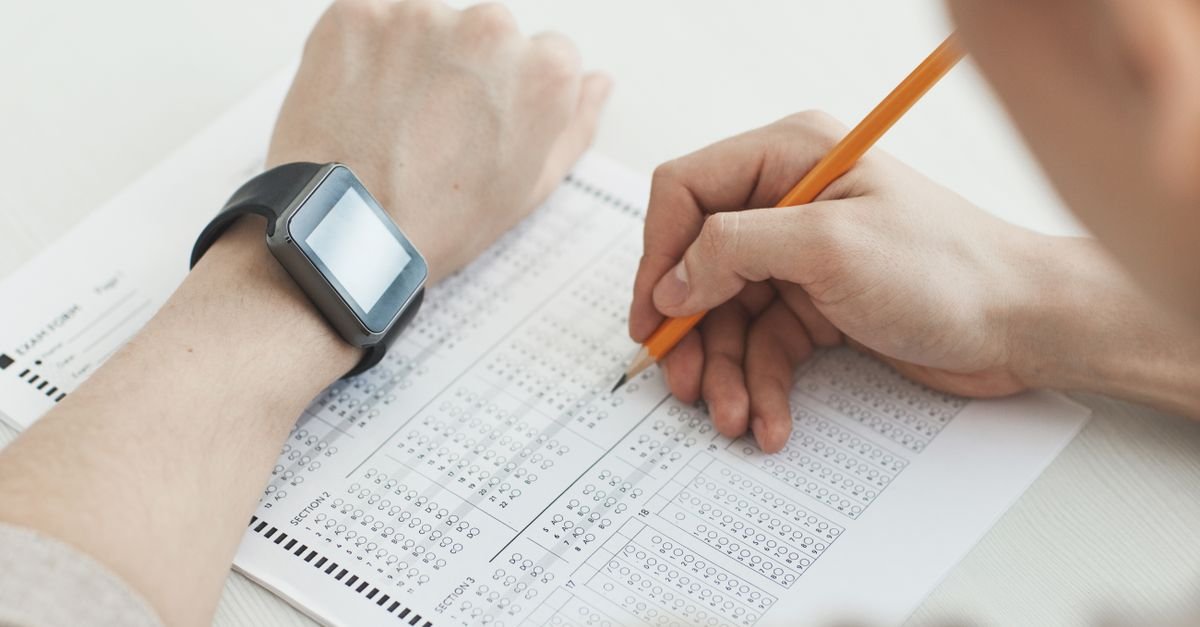
What open book actually changes about studying
If the exam tested recall, the right preparation would be memorising content. Because it tests retrieval, the right preparation is different, and mostly it is about building a map.
- Know which book answers which kind of question. Before you can find a page you have to pick a book. Candidates lose more time at this step than anywhere else, and it is entirely fixable.
- Know the structure of each book, not its contents. Where the tables live, where the definitions live, how the index is organised and how it lies to you.
- Practise looking things up under time pressure. Reading a chapter is not practice. Being handed a question and racing to the page is.
- Learn the questions that cannot be looked up. Some Business and Finance maths has to be executed, not located. Knowing which is which is worth more than another pass through the material, and the maths the book will not do for you goes through exactly which calculations fall into that group.
The uncomfortable implication is that a candidate who has read everything once and cannot navigate quickly will do worse than one who has read less and knows exactly where things are.
Three minutes is a decision rule, not a target
The useful way to use that number is as a trigger. If you are past roughly three minutes on a Business and Finance question and you are not close, the expected value of continuing is poor. Mark it, move on, come back with whatever time remains.
Candidates who fail narrowly often lose on questions they never reached, not on questions they got wrong. Running out of time is a preparation failure that looks like a knowledge failure.
What does running out of time actually cost you?
Enough to make an afternoon of timed practice look cheap. A retake is not a free second attempt. Each registration carries a 135 dollar examination development and application fee to Professional Testing, the contractor that builds and scores the exams for the state, plus an 80 dollar administration fee, so 215 dollars per part, per attempt, as of September 2026. Fail two parts and you are 430 dollars down before you have opened a book.
The other cost is the calendar. A retake has to be registered, scheduled and sat, and test dates are not always available in the week you want one. For a lot of candidates the real price of a narrow fail is measured in weeks of not being able to pull permits, and that is the number nobody puts on the invoice. Fees and scheduling rules are set by the department and change, so confirm both before you budget for them.

What you may and may not bring
Two constraints do most of the work here, and both catch people out.
First, only approved reference materials are allowed. The list is maintained by the Florida DBPR and it differs by licence category, so a bundle assembled for a different licence is not automatically right for yours. The certified specialty categories sit their own open book trade paper on the same terms, which is why the two exams behind Florida irrigation certification follow the same book rules as the three above. which books you can bring covers how to check.
Second, and this is where genuinely wrong information circulates: permanent book tabs and highlighting or underlining are allowed, but written notes are not. That distinction is precise and it is enforced. what you may mark in your books covers exactly what that means in practice, because some pages currently ranking on this topic get it backwards.
Rules are set by the DBPR and can change. Confirm the approved reference list that applies to your specific test date and licence category rather than relying on any page, including this one.
What to do with this
- Get the correct approved reference list for your licence category and test date.
- Build a one page map of which book covers which topic area, and learn it cold.
- Tab and highlight within the rules. See what you may mark in your books.
- Do timed retrieval practice rather than reading practice.
- Set a personal cutoff per question and actually obey it on the day.
For the structure and pass rates of each part, see the format of each exam. If a part has already gone badly, what happens if you fail a part has the retake rules.
Frequently asked questions
Is the Florida contractor exam open book?
Yes. All Florida construction examinations are open book and consist of multiple choice questions. Candidates are strongly encouraged to bring the approved reference materials, and no other references are permitted at the examination site.
How much time do you get per question?
Business and Finance allows 6.5 hours for 125 questions, roughly 3 minutes 7 seconds each. Contract Administration and Project Management each allow 4.75 hours for 65 questions, roughly 4 minutes 23 seconds each.
Does open book make the exam easier?
It changes what is being tested rather than lowering the difficulty. The exam measures how quickly you can locate an answer in the approved references, so candidates who have read widely but cannot navigate quickly often run out of time.
What are pilot questions?
Each exam includes 5 pilot questions that are not graded and do not count for or against your score. You are not told which ones they are.
Can I bring my own notes?
No. Permanent book tabs and highlighting or underlining are allowed in books taken into the examination, but written notes are not permitted.
Are the approved books the same for every licence?
No. The approved reference list is maintained by the Florida DBPR and differs by licence category, so a book set assembled for a different licence may not be correct for yours.
Why do sources disagree on how many questions the exam has?
Because some quote the scored questions and some quote everything you are shown. Business and Finance is commonly listed as 120 scored questions and presented as 125, the difference being 5 ungraded pilot questions. The trade parts are 60 scored and 65 presented. Both figures are correct, and the one that governs your time budget is the larger one, because you still have to read and answer the pilot items.
How much does it cost to retake a part you failed?
As of September 2026, roughly 215 dollars per part per attempt: a 135 dollar examination development and application fee to Professional Testing, plus an 80 dollar administration fee. Fees are set by the department and change without notice, so confirm the current amount before you register rather than budgeting from this page.
Exam rules, approved reference lists and fees are set by the Florida DBPR and change without notice. This page was verified in August 2026 and last rechecked on 6 September 2026. Always confirm against the current DBPR reference list for your test date. We are independent and not affiliated with, endorsed by or approved by the Florida DBPR.

Leave a Reply